Optimizing Human Potential · Nature · Nurture · Productivity · Progression
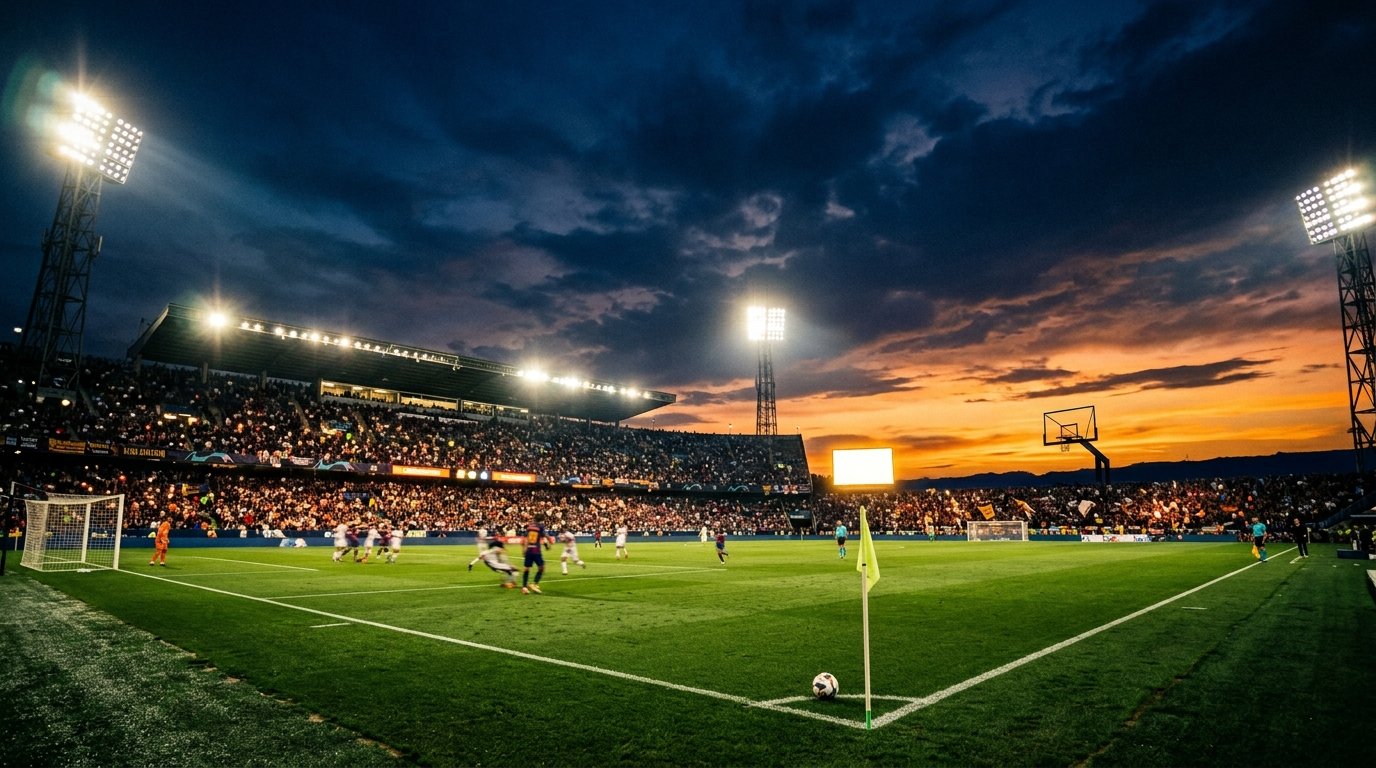
Soccer Explained in Basketball Terms
A World Cup Cheat Sheet
Don’t follow soccer? Neither did most of America. Here’s everything — offside, formations, bromances, and hydration breaks — explained entirely in basketball.
The World Cup is happening. Erling Haaland is everywhere. Jude Bellingham and Haaland are apparently the internet’s favourite bromance. And you’re sitting there trying to figure out what offside means. We’ve got you.
Here’s every important soccer concept, explained entirely in basketball terms. By the end of this, you’ll be watching the games, understanding the drama, and maybe even caring about Vozinha’s mom making the trip to watch her son play goalkeeper for Cape Verde.
⚽ The Scale of What’s Happening Right Now
3.5BPeople are expected to watch the 2026 World Cup final. That’s nearly half the planet. The NBA Finals draws about 15 million. This is different.
The Basics: Sport Structure
Basketball and soccer are more similar than you think. Both involve two teams trying to score more than the other in a defined time period, with a goalkeeper (like a point guard on defense — except they use their hands) as the last line of defense. Here’s the translation guide:
| Soccer | = | Basketball Equivalent |
|---|---|---|
| 90-minute match (2 × 45-min halves) | ≈ | 4 × 12-minute quarters. Except there are NO timeouts mid-half. Pure endurance. |
| 11 players per side | ≈ | 5 players per side, but with 6 more standing around watching. Soccer benches 10 extra. |
| Goalkeeper | ≈ | The shot blocker — except they can use their hands and the whole area in front of the basket is theirs exclusively. |
| Striker | ≈ | Center / Power Forward. The one everyone wants in the paint to finish. Haaland = Nikola Jokić. |
| Playmaker / No. 10 | ≈ | Point Guard. The one who reads the game, sets up others, and has the ball the most. Jude Bellingham = Steph Curry. |
| Winger | ≈ | Shooting Guard. Fast, operates on the edges, cuts into space for open shots. |
| Centre-Back | ≈ | Center on defense. Aerial duels = shot blocking. The last wall before the goalkeeper. |
| Full-Back | ≈ | The stretch 4 — primarily defensive, but now expected to run the entire court and contribute offensively. |
| Defensive Midfielder | ≈ | Draymond Green. Does everything, scores nothing obvious, and the team cannot function without them. |
The Bromances 🤝 — This Week’s Biggest Storyline
The internet has discovered that soccer players have genuine friendships that cross rival teams. This is this week’s most searched topic globally, and it’s genuinely wholesome.
Haaland + Bellingham = Steph + KD (The Dream Team That Almost Wasn’t)
Erling Haaland (Norway, Manchester City striker) and Jude Bellingham (England, Real Madrid) are the most-searched bromance of the tournament. They play for rival clubs, rival nations, and yet genuinely seem to like each other. The internet cannot stop searching whether they’re friends. They are. It’s the soccer equivalent of Steph Curry and Kevin Durant — different teams, mutual respect, chaotic when together at international tournaments.
Mbappé + Hakimi = The International Best Friends
Kylian Mbappé (France) and Achraf Hakimi (Morocco) are childhood friends who grew up in the same neighbourhood in Paris. They play for rival nations. Think Kyrie Irving and a teammate from his high school team who went pro for a different country. The “are Hakimi and Mbappé best friends” search is climbing because the answer is a genuinely heartwarming yes.
Watch the World Cup + Track Your Focus During Marathon Game Sessions
If you’re watching multiple games a day, your HRV will tell the story. Track your recovery, sleep, and focus scores through the tournament with the 7 Pillars Health Tracker — built exactly for moments like this.
Get the 7 Pillars Tracker → $19.89 · Instant downloadThe Rules Nobody Explains ⚠️
Offside = The 3-Second Violation (Kind Of)
In basketball, you can’t stand in the paint (key) for more than 3 seconds. In soccer, you can’t receive a pass if you’re closer to the opponent’s goal line than both the ball and the second-to-last defender at the moment the pass is played. Translation: you can’t camp out near the opponent’s goalkeeper waiting for an easy tap-in. You have to be behind the defenders when the ball is kicked to you. Get caught in front of them when the pass happens? Offside. Whistle. Restart. Collective groaning.
Yellow Card = Technical Foul
One technical foul is a warning. Two technicals and you’re ejected. In soccer: one yellow card is a warning. Two yellows (a second technical) = automatic red card, you’re off the pitch, and your team plays with 10 people for the rest of the match. Unlike basketball, no substitute comes in. Your team plays down a man.
Red Card = Flagrant-2, Ejection, Plus Suspension
Immediate ejection. Unlike basketball, the red card player is also suspended for the next game (or more). A red card in a knockout round can be devastating — your team not only finishes the game 10 vs 11, but that player misses the next match entirely.
VAR = Instant Replay Challenge (Except the Referee Initiates It, Not the Coach)
Video Assistant Referee. Like NBA instant replay, but the VAR team watching in a remote location can flag the on-field referee to review a decision. The on-field referee then walks to a sideline monitor to review the call. The key difference: coaches can’t challenge calls. The system flags reviews automatically.
Injury Time / Added Time = The Clock Keeps Running But It Shouldn’t
Soccer has a running clock that never stops — not for injuries, substitutions, or goal celebrations. Instead, the referee counts the time lost and “adds” it on at the end. You’ll see “90+5” — meaning 5 extra minutes. Unlike basketball, you don’t stop the clock. Everyone just knows there are more minutes coming. It creates genuine chaos in the final moments.
The Hydration Breaks 💧 — Why They Keep Stopping the Game
You’ve probably noticed that the players stop for mandatory water breaks during the match. This is one of the most-searched topics from this year’s tournament (search: “why are there hydration breaks in soccer?”).
In intense heat, FIFA mandates two hydration breaks — one in each half, typically around the 30th and 75th minute. Soccer players run an average of 7 miles per match at high intensity. A World Cup referee runs the same distance. In summer heat, hyponatremia (low sodium from inadequate hydration) and heat stroke are genuine risks.
The Hydration Science Behind the Breaks
A 2% drop in body weight from sweat loss reduces athletic performance by 10-20%. Soccer players lose 1-2 litres of sweat per hour. The mandatory hydration breaks aren’t a luxury — they’re a performance and safety protocol. It’s exactly why Haaland’s hydration habits are trending: he reportedly drinks only highly filtered water. The science backs obsessive hydration for endurance athletes.
This also explains why “does England drink tea at the hydration break” became a trending search. (The answer: some players do have hot beverages, which is counterproductive to core temperature cooling. Sports science: cold drinks lower core temperature faster during breaks.)
The Hydration Protocol That Elite Athletes Use
Haaland’s filtered water obsession isn’t an accident — hydration is Pillar 2 of PM’s 7-pillar health system. Track your daily intake, timing, and the measurable impact on focus and HRV.
7 Pillars Tracker → $19.89 · Includes hydration logErling Haaland’s Morning Routine 🌅 — And Why It’s Trending
“Erling Haaland morning routine” is currently a breakout search globally. People are not just interested in how he plays — they want to know how he lives. Here’s what’s known:
- Highly filtered water — Haaland reportedly drinks only water he filters himself, a habit that mirrors elite biohacker protocols for reducing contaminants and optimising cellular hydration.
- Cow heart — has been documented eating organ meats for nutrient density (heart is extremely high in CoQ10, which supports mitochondrial energy production).
- Raw milk — trending search because Haaland has mentioned whole, less-processed dairy. Controversial nutritionally but consistent with his approach to minimally processed foods.
- 10+ hours of sleep — like most elite athletes who understand the science, Haaland prioritises sleep above almost everything else.
- Strict morning sequence — no details are public, but the fact that people are searching “Haaland morning routine” reflects the cultural recognition that elite performance starts the night before and continues through the morning protocol.
“The best athletes in the world have figured out that winning the morning is as important as winning the match. Haaland’s habits aren’t extreme. They’re the logical conclusion of taking your body seriously.”
Productivity Manor · 7 Pillars Health SystemThe Productivity Science Hidden in 90 Minutes ⏱️
Here’s the PM angle that most sports coverage misses: the structure of a soccer match is actually one of the most demanding psychological endurance tests in professional sport.
No Timeouts = The Pomodoro Technique on Steroids
A basketball player has time-outs, quarter breaks, free throws, and fouls to mentally reset. A soccer player has none of that. For 45 uninterrupted minutes, they must sustain focus, decision-making, and physical output simultaneously — no breaks, no resets. The research on sustained cognitive performance shows that 45–50 minutes is approximately the limit of high-quality focused attention before diminishing returns. Soccer was accidentally designed around the science of focus.
Decision Fatigue in the Final 15
Studies show that decision quality degrades significantly after 60–70 minutes of sustained effort. This is why goals in the final 15 minutes of soccer are so common — defenders are making more errors, their prefrontal cortex is fatigued, and split-second decision-making deteriorates. This is the same cognitive depletion that causes late-afternoon productivity slumps. Your 3pm low is Haaland’s 85th minute.
Why We Sleep — Matthew Walker
Haaland sleeps 10+ hours. Matthew Walker’s landmark book explains the science of why elite athletes who prioritise sleep outperform those who don’t. Every PM reader should own this book.
Read on Amazon → Available in hardback, paperback, Kindle, and AudibleThe Post-Match Recovery Protocol 🌿
What elite soccer players do in the 20 minutes after a match maps almost perfectly to PM’s 7 Pillars recovery protocol. The sequence: cold therapy or ice bath (reduces inflammatory cortisol spike), high-protein recovery meal within 30 minutes (Pillar 5 Nutrition), compression garments, sleep priority (not optional), and HRV monitoring the following morning to assess recovery quality.
The 20-minute window after a match is also the window where emotional flooding is most likely — players who have just played 90 minutes under extreme stress have elevated cortisol, depleted prefrontal function, and heightened emotional reactivity. The interviews you see where players say things they regret? That’s emotional flooding, captured on camera, immediately post-match.
Oura Ring Gen 4 — Track Your Own HRV Like an Athlete
Elite teams use HRV data to decide whether players are ready to perform. You can track the same metric for your workday readiness with the Oura Ring Gen 4 — the most accurate consumer HRV tracker available.
View on Amazon → From $299 · Tracks HRV, sleep stages, readiness scoreYour World Cup Glossary 📋
- Clean sheet = shutout (goalkeeper keeps the opponent from scoring)
- Hat trick = scoring 3 goals in one match. In basketball: a triple-double equivalent in achievement rarity.
- Penalty shootout = overtime decided by free throws. One-on-one, goalkeeper versus striker, alternating kicks. Psychological pressure that makes NBA free throws look relaxed.
- Extra time = two 15-minute overtime periods before the penalty shootout.
- Formation = the offensive and defensive scheme. 4-3-3 = four defenders, three midfielders, three forwards. 5-4-1 = zone defense with one striker.
- Pressing = full-court press. The team without the ball applies intense pressure immediately after losing possession.
- Counter-attack = fast break. Win the ball, transition quickly before the defense sets.
- Brace = two goals by the same player in one match. In basketball: scoring 40+ in a game doesn’t have a special name but should.
🌿 The 7 Pillars Health Tracker
Haaland tracks his sleep, hydration, nutrition, and recovery obsessively. The 7 Pillars Health Tracker gives you the same structured system — 90 days of tracking across sleep, hydration, movement, mindfulness, nutrition, environment, and light. Build your champion protocol.
Get the 7 Pillars Tracker · $19.89 →Final Whistle 🏁
The World Cup is the biggest sports event on the planet, and you now have everything you need to follow it intelligently. Watch for Haaland’s movement off the ball (how he creates space before the pass arrives — like a center setting a screen). Watch the defensive shape when a team is under pressure (do they press high or drop into a low block?). Watch the hydration breaks and notice how player decision-making changes in the 80th minute compared to the 30th.
And if Vozinha’s mom is at the stadium watching Cape Verde play, know that she might have gotten there because someone asked “who paid for Vozinha’s mom’s visa” — and the internet collectively decided that was a story worth following. That’s the World Cup.
Atomic Habits — James Clear
Elite athletes don’t have willpower. They have systems. Atomic Habits is the science of building the morning routine, recovery protocol, and performance habits that make world-class performance feel effortless. Referenced throughout PM’s content — essential reading.
Read on Amazon → Bestseller · Available in all formats